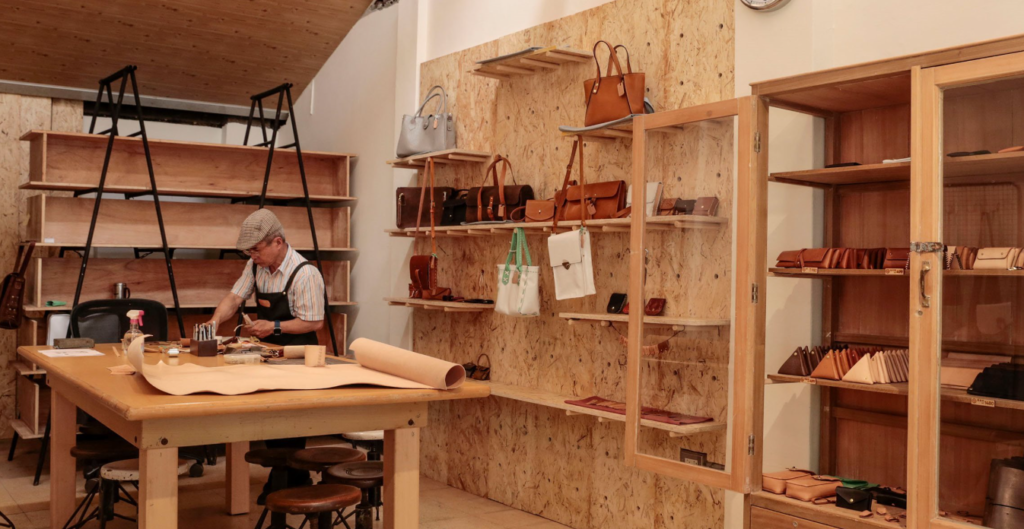
Sustainability has become more than a trend — it is now a responsibility. In the fashion and accessories industry, leather often receives criticism due to environmental concerns. However, not all leather products are created equal. Artisan leather goods offer a fundamentally more sustainable alternative to mass-produced accessories.
Understanding why requires looking at materials, production methods, longevity, and social impact.
Small-Batch Production vs Mass Manufacturing
Artisan leather goods are typically produced in small batches or as individual pieces. This contrasts sharply with factory-made accessories produced at industrial scale.
Small-batch production reduces:
- Excess waste
- Overstock and landfill contribution
- Energy consumption per unit
Mass production prioritizes speed and cost efficiency, often sacrificing durability and sustainability.
Ethical Sourcing of Materials
Many artisan workshops source leather as a byproduct of the food industry. This means hides that would otherwise be discarded are repurposed into long-lasting products.
In contrast, low-cost mass production frequently uses:
- Chrome-tanned leather with high chemical runoff
- Synthetic “leather” derived from petroleum
Vegetable-tanned and responsibly processed leather has a lower environmental footprint when managed correctly.
Durability as a Sustainability Factor
One of the most overlooked aspects of sustainability is product lifespan.
A well-made artisan leather bag can last 10–30 years. Mass-produced alternatives often fail within one or two seasons due to inferior stitching, coatings, or bonded leather layers.
Fewer replacements mean:
- Less resource extraction
- Lower carbon emissions over time
- Reduced consumer waste
Durability is sustainability in practice.
Reduced Chemical Dependency
Artisan producers often avoid harsh chemical finishes that hide imperfections. Instead, they work with natural textures, oils, and dyes.
This approach:
- Protects water systems
- Improves worker safety
- Creates biodegradable end-of-life products
Industrial factories rely heavily on chemical coatings to standardize appearance, increasing environmental risk.
Supporting Local Artisan Communities
Sustainability is not only environmental — it is social.
Artisan leather goods support:
- Skilled craftsmanship
- Fair wages
- Preservation of cultural techniques
When consumers buy artisan products, money circulates within communities instead of flowing exclusively to large corporations.
Transparency and Traceability
Artisan brands are often more transparent about where materials come from and how products are made. This traceability builds consumer trust and accountability.
Mass-produced accessories rarely provide this level of detail.
Cost vs True Value
While artisan leather goods often cost more upfront, they offer better long-term value. Lower replacement frequency and repairability offset the initial price difference.
From a sustainability perspective, buying fewer, better items is more impactful than choosing cheap alternatives repeatedly.
Final Perspective
Choosing artisan leather goods is a conscious decision that benefits the environment, supports ethical labor, and promotes long-term use. Sustainability is not about perfection — it is about making better choices consistently.
Artisan craftsmanship represents one of those better choices.